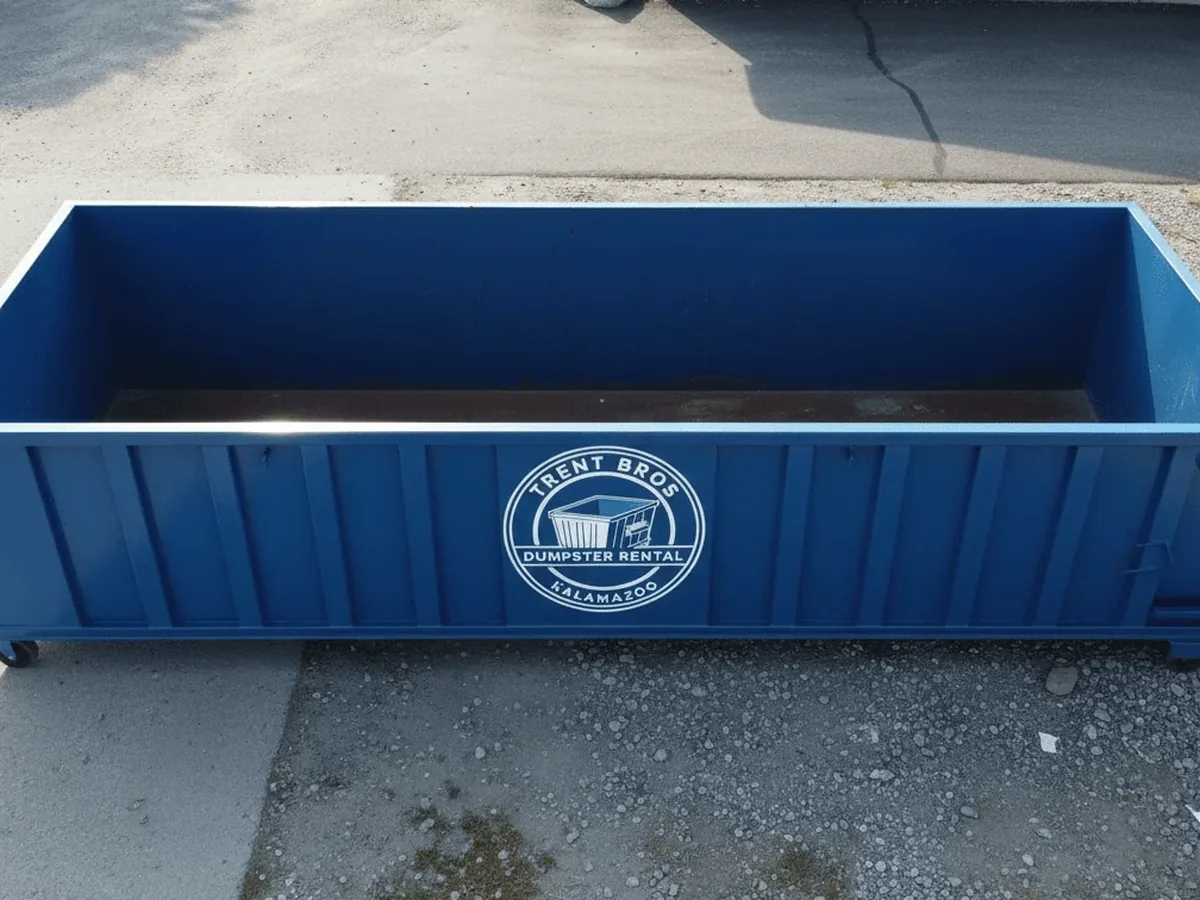

Dumpster Placement and Driveway Protection in Kalamazoo
A roll-off container is heavy, and where and how it lands matters. Here's how we think about placement and surface protection, especially on older Kalamazoo-area driveways.
ReadSizing Guide guide
A practical way to think through our five container sizes — 10 through 40 yard — based on the actual project, not just guesswork.

We offer five container sizes — 10, 15, 20, 30, and 40 yard — and the right one for your project depends on two things that don't always move together: how much space your debris takes up, and how much it weighs. Getting both right the first time avoids two common problems: paying for capacity you didn't need, or ordering a size that fills up before the job is done.
Volume is how much physical space debris takes up in the container. Weight is a separate consideration, and every rental includes a weight allowance built into the rate. Light, bulky material — furniture, household junk, packaging — rarely comes close to that allowance even in a large container. Dense material — concrete, tile, roofing shingles, old plaster — can hit the weight limit long before the container looks full. The practical takeaway: describe both what you're throwing away and roughly how much of it when you call, not just the square footage of the project. Two jobs that look similar on paper can call for two very different container sizes once the actual debris mix is factored in.
Here's how our five sizes generally map to real projects in the Kalamazoo area:
Good for smaller jobs: a single-room cleanout, a garage or shed clear-out, a small bathroom remodel, or general yard waste. This is our most compact option and works well when space on the property is limited.
A step up from the 10 yard, suited to mid-size cleanouts, a small renovation, or a moderate amount of yard waste and general debris. This size also tends to work well for older homes where a single room's worth of demolition — plaster, old flooring, original trim — runs heavier and bulkier than the same job in a newer house.
One of our most commonly booked sizes, and a good fit for a kitchen or larger bathroom renovation, a full garage cleanout, or a standard single-layer roof tear-off. See our roofing checklist if that's your project specifically.
Suited to larger renovations, whole-house cleanouts, and new-construction framing-stage debris. If you're clearing out a larger or long-occupied home for an estate cleanout, or working on a residential new build, a 30 yard is often the right starting point. Our estate cleanout guide and new construction guide both cover project-specific sizing in more detail.
Our largest container, generally reserved for major demolition, large-scale construction debris, or commercial projects generating a significant volume of material. If your project is at this scale, a phone call describing the scope will get you a more precise recommendation than trying to estimate from a general guide.
Sizing gets more accurate with a short conversation than it does from a chart alone, because project details — how many rooms, how old the home is, what kind of material is coming out, and where in our service area the delivery needs to go — all shift the recommendation. Call (269) 388-8586 and describe your project, and we'll walk through size and weight together and land on a container that fits without over-ordering. See our cost guide for how size and weight translate into an actual quote.
Talk to a real person
Call (269) 388-8586 and describe the job. Flat price, stated tonnage allowance, and a delivery window on the same call.
Mon–Sat 7:00am – 7:00pm
From this guide
Volume is how much space debris takes up; weight is a separate factor covered by an included allowance. Light bulky material rarely hits the weight limit, but dense material like concrete or shingles can, well before the container looks full.
A 15 or 20 yard covers a large share of residential projects — mid-size cleanouts, renovations, and standard roof tear-offs. Smaller jobs often work with a 10 yard, and larger renovations or whole-house cleanouts often need a 30 yard.
Not necessarily — a larger container costs more, and if your project is genuinely smaller, you'll pay for space you don't use. A quick call describing the project usually lands on the right size without over-ordering.
A 20 yard handles a typical single-layer tear-off on an average home; multiple shingle layers or a larger roof often call for a 30 yard. See our roofing checklist for specifics.
A 40 yard, generally used for major demolition, large-scale construction debris, or commercial projects.
Call (269) 388-8586 and describe the project in detail — type of job, approximate amount of material, and whether it's dense debris like concrete or shingles versus lighter household items. We'll help you land on the right size.
Keep reading
A roll-off container is heavy, and where and how it lands matters. Here's how we think about placement and surface protection, especially on older Kalamazoo-area driveways.
ReadVine's older housing stock brings a genuinely different renovation debris profile than a newer remodel — heavier walls, narrower streets, and a few things best left to a licensed specialist.
ReadA plain-language look at what actually moves a dumpster rental quote in Kalamazoo — size, debris weight, delivery location, and rental length — and why our rates run $350 to $750.
Read