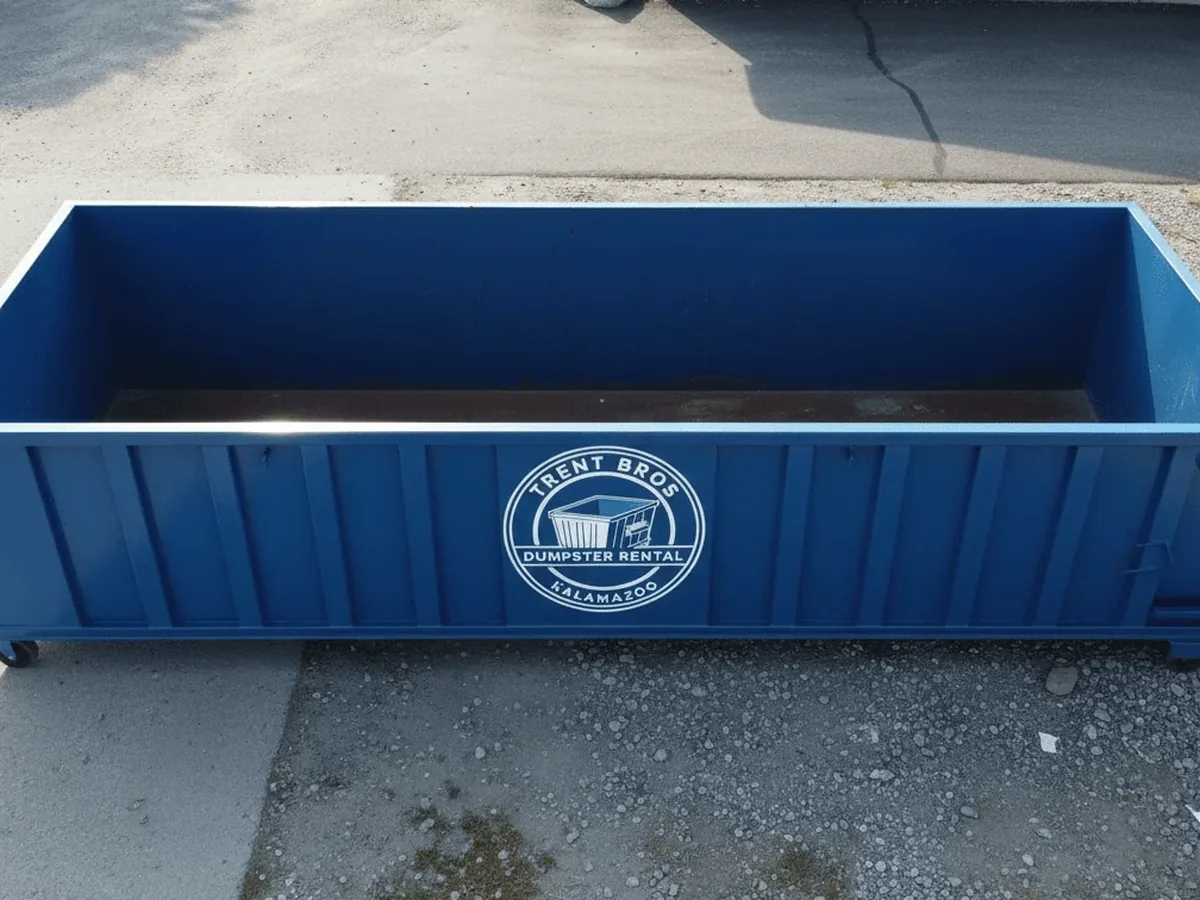
A loaded roll-off container is heavy, and the way it's placed matters as much as the container size itself. Whether it's a driveway, a gravel pad, or a section of yard, protecting the surface underneath is a standard part of every delivery, not something we treat as optional or upgrade separately.
Why placement deserves attention
The container's weight is concentrated on a relatively small footprint, and dragging it into position without care can crack asphalt, chip concrete, or leave ruts in softer ground. This matters everywhere, but it's a bigger consideration on older driveways — many homes in and around Kalamazoo have original asphalt or concrete that's held up well for decades but is more prone to cracking under concentrated weight than a newer surface poured to current standards.
How we protect the surface
Placement boards go down under the container's contact points before it's set in place, spreading the weight out instead of concentrating it directly on the driveway or pad. This is standard practice on every delivery, whether the surface is a newer driveway or an older one that needs a bit more care. If your driveway has existing cracks, an uneven surface, or areas that already look stressed, mention it when you book — we'll take extra care around those spots specifically.
Placement considerations for older homes
Kalamazoo has plenty of older housing stock, including narrower driveways, shorter setbacks from the street, and in some cases gravel or unpaved surfaces rather than poured concrete or asphalt. Each of these changes how we think about placement:
- Narrow driveways may limit exactly where a larger container can sit, or point toward a smaller size that fits the available space more comfortably.
- Gravel or unpaved surfaces need placement boards positioned carefully to avoid creating ruts, especially if the ground is soft from recent rain or snowmelt.
- Tight setbacks sometimes mean less room to maneuver during delivery and pickup, which we plan for ahead of time rather than discovering on arrival.
What to do before delivery day
A little preparation on your end helps things go smoothly: clear the intended placement area of vehicles, outdoor furniture, and anything else that might be in the way, and let us know about any low-hanging branches, utility lines, or other overhead obstacles near the drop zone. If you're unsure exactly where the container should go, we can talk through it on the phone before the truck arrives, or our driver can help you decide the best spot on delivery.
If a driveway isn't available or isn't large enough, placement on a section of lawn or yard is often possible. Placement boards matter here too, both to protect the grass and to keep the container from settling unevenly on softer ground. This is common enough on larger properties and rural-adjacent townships in our service area that it's a routine part of scheduling, not an unusual request.
Getting placement right from the start
The best time to think through placement is before the truck leaves our yard, not after it arrives. Call (269) 388-8586 and describe your driveway or yard — surface type, age, any known trouble spots, and available space — and we'll plan the delivery around protecting your property from the start.